Juan (Merhershala Ali) takes "Little" (Alex Hibberet) to the beach and teaches him how to swim. The scene is like a baptism: a moment of communion and spiritual connection between the two. Juan shows Little how to move through the water, and then compels him to lay back and float while he supports him, cradling his head like a priest would a baby
The trust between "Little" and Juan was embodied during the moments when Juan kept "Little" and Juan was embodied during the moments when Juan kept "Little" afloat in the water almost resembling a baptism.
This scene signals the first bonding moment between "Little" and Juan. Here we see Juan assuming a faster role as he reaches "Little" to swim.
The camera lense is slightly submerged in the water to give an immersive perspective as if the audience is in the great body of water, which conveys that the two characters are in the middle of the world. The camera bobs through the water alongside the two bodies, occasionally dipping beneath the water, submerging the audience in the scene.
The moment seems to be revelatory for Little, and its significance is echoed in other moments that use water throughout the film.
The score in this scene features a dramatic buildup which evokes the feeling of being on the edge of something important, a moment of change or transference.
The music relates the sharp contrast in the emotions that are churning inside of Chiron as he is represented by the lone, intense violin playing separate from the music. The non-diegetic sound of the crashing waves on the beach in the background continues to add to the feeling of power mixed with danger, which helps represent that Chriron has a huge decision to make of who he wants to be.
Moonlight, especially in this scene, showcases things that resonates on a personal level like connection and self-discovery, and it requires the film and it's score to exist on a personal scale.
Moonlight, especially in this scene, showcases things that resonates on a personal level like connection and self-discovery, and it requires the film and it's score to exist on a personal scale.
The vulnerability can be inferred through the lack of clothing in the water and the two being the only people on the ocean conversing to the audience a sense of intimacy be maybe intrusion, as the audience watches on as the two stay afloat in the water. The temporary father-son scene of further emphasised in the warm and hartfelt look on the character Juana face as he looks on at Little and hold him afloat, Little, himself, is unfazed later as her goes swimming on by himself being prompted by Juan's voice in the background of the scene.
The movie
itself is set in three parts of the growing character of Chiron and shows the
ever changing aspects of black male masculinity. The play jumps around in time,
but Barry Jenkins decided he wanted the film to be three distinct parts.
Hsiao-Hsien Hou’s 'Three Times' was a big inspiration on what he was aiming for. “I wanted to show the progression of this character and how the world can nurture him in a certain way that basically causes drastic changes in this guy from one stage to the next.”
Hsiao-Hsien Hou’s 'Three Times' was a big inspiration on what he was aiming for. “I wanted to show the progression of this character and how the world can nurture him in a certain way that basically causes drastic changes in this guy from one stage to the next.”
Moonlight
juxtaposes different kinds of
masculinity, not only by showcasing the variations of masculinity but how they
all coincide with each other, in a more twisted system. There is the
overwhelming and chocking, hetro-patriarchal masculinity of the neighbourhood
in which protagonist Chiron resides in, then his own kept and tender
masculinity, the archetypal toxic and insecure masculinity of the school bully
Terrell, the erratic and performative masculinity of Chiron's close friend and
"love interest ", Kevin and finally the more complex, layered and
warm masculinity of the fatherly ally, Juan.
Black men are stereotyped as violent however we see Juan as a vessel for encouragement and guidance to an emotionalism abused Chiron which challenges the stereotype by juxtaposing the idea of a father figure within a drug dealer. As the common representation of a black male is seen as overtly masculine and void of emotion, this un-scripted scene, really captures a more subverted image of the black male on film. This, by showing a more sensitive image of two black men,young and old, to the world rather than cold and emotionless really deconstructs the idea of black masculinity a conversation which isn't commonly had in the black community.
Media Representations/ Audience /Media Values and Ideology
The target audience in terms of psychographics would be the mainstreamers, the explorers and the reformers. In terms of demographics it would appeal to an A
BC1 audience, mainly consisting of the young adult group and older.
The way it way the trailer showed what it was about and the promotions that went into promoting the film were done well to inform audiences what the film would be about. Because of those it would appeal greatly to a lot of Black people as I said mostly those of a young adult group but maybe those of an older age as many LGBTQ+ are 50+ and as they were pictures of people in Pride pictures and such, I think there would be a small percentage of them viewing the movie.
It may also appeal to white, middle aged men and women who at first may not like it as it is quite explicit, but it allows them to have a greater understanding of the issues faced.
The main major values of Moonlight would be to speak of deconstructing black masculinity and homosexuality but also the growth of young black boys and how environments can change them psychologically.
Moonlight is a film conscious of how failing institutions destroy the black community: Institutionalised black men replace drug dealers, and a surrogate father (Juan, played compassionately by Mahershala Ali) can only do so much good if he’s also making a living by selling crack to a mother, a jarring realisation Chiron makes in one heartbreaking scene.
There have been many forms of Youtube videos and website breakdowns of fragile masculinity, as well as hashtags in twitter of the term being used by people when they see such things r.g when people see gendered products such as for toothbrushes. Also, with the increase of attacks on Gay and Trans men in the black community from strangers or even family members, to Gay men being harassed and not having positive representation for Gay POC this would be good to help those identify in this movie.
Media Representations/ Audience /Media Values and Ideology
Moonlight centres Black maleness/masculinity, but more specifically Black male sexuality as well as Black male intimacy and youth. It is worth saying that all the characters are Black, but not in a way that it becomes a myopic or singular exclusory narrative, rather it brings you into a world that is real and that does exist. The fact that most of its reviewers choose to highlight its queerness above other important elements demonstrates an ignorance of intersectional struggle that causes problems between movements. We are at a time where gay culture is overwhelmingly white, Barry Jenkins explores the experience of queer black men and the challenges they face.
This film doesn’t cheapen itself by following a predictable narrative. The queer characters did not die in the film because they were queer. They were not used as a prop for the dangers of STIs or mental health- though queer people are affected by serious mental problems as any other. However, I argue that queer characters are often one-dimensional and lack personality or interactions that are their own. They are often over simplified and aren’t represented as engaging characters with the same level of depth as their heterosexual or white counterparts.
Moonlight raises the question of Black male performativity; what Black men need to do to be considered a Black man, who decides these rules, and how, so often, exploring and discovering your sexuality – outside of heteronormative (straight) norms – is seen as a denial of your Black masculinity. For so long, Black male masculinity, and representation of that, has been considered to be one of strength, muscularity, sexual endowment, and performance, aggressiveness, criminality etc (which are really remnants of the colonial white gaze), that behaving in anyway outside of these socialised norms causes social exclusion and alienation, sometimes even violence.
This is essentially the experience that Chiron has as a teenager (act ii), he is dangly, and awkward, not athletic, or muscular, and discovering his sexuality, and is teased for not being able to perform (in regards to Black masculinity) in the same way as the other Black boys, but conversely, Kevin, who also explores his sexuality, is not teased or socially excluded because he does perform according to the socialised norms of Black masculinity (and keeps his sexual fluidity hidden).
This is essentially the experience that Chiron has as a teenager (act ii), he is dangly, and awkward, not athletic, or muscular, and discovering his sexuality, and is teased for not being able to perform (in regards to Black masculinity) in the same way as the other Black boys, but conversely, Kevin, who also explores his sexuality, is not teased or socially excluded because he does perform according to the socialised norms of Black masculinity (and keeps his sexual fluidity hidden).
Moonlight' also represents the 'broken family' shown through the absence of father less Chiron and drug addicted mother. A common stereotype held of black families, while affirming this stereotype, it should be stated that many of those who fit the stereotype doesn't lessen their humanity just because they are the negative stereotypes of a minority.
The representation of Youth is conveyed through the first canker of the film and through the confused and closed camera shots of 'Little' (young Chiron) and is used to show his exploration, the learning experience. Drug dealing is a legitimized occupation, imprisonment is commonplace, and aggressive masculinity is an established survival skill. Research published by the American Psychological Association, Black boys as young as 10 are proven to not be given the same presumption of childhood innocence as their White peers. Instead, they’re considered to be much older than what they are, perceived to be guilty, and face police violence if accused of a crime. As black boys aren't seen as children themselves a lot of the the time on media and in pictures Moonlight subverts these representations of young black ales and gives a different more appropriate form of which they should be seen as. Moonlight is rooted in contemporary and cultural blackness. There is, in Moonlight, both the perpetuation and annihilation of stereotypes—for example, Chiron’s arrest, and the reasons behind his arrest. The whole concept felt very much like navigating America in a black body, all these signs woven into my skin, so many expectations of disgrace and failure.
BC1 audience, mainly consisting of the young adult group and older.
The way it way the trailer showed what it was about and the promotions that went into promoting the film were done well to inform audiences what the film would be about. Because of those it would appeal greatly to a lot of Black people as I said mostly those of a young adult group but maybe those of an older age as many LGBTQ+ are 50+ and as they were pictures of people in Pride pictures and such, I think there would be a small percentage of them viewing the movie.
It may also appeal to white, middle aged men and women who at first may not like it as it is quite explicit, but it allows them to have a greater understanding of the issues faced.
The main major values of Moonlight would be to speak of deconstructing black masculinity and homosexuality but also the growth of young black boys and how environments can change them psychologically.
Moonlight is a film conscious of how failing institutions destroy the black community: Institutionalised black men replace drug dealers, and a surrogate father (Juan, played compassionately by Mahershala Ali) can only do so much good if he’s also making a living by selling crack to a mother, a jarring realisation Chiron makes in one heartbreaking scene.
There have been many forms of Youtube videos and website breakdowns of fragile masculinity, as well as hashtags in twitter of the term being used by people when they see such things r.g when people see gendered products such as for toothbrushes. Also, with the increase of attacks on Gay and Trans men in the black community from strangers or even family members, to Gay men being harassed and not having positive representation for Gay POC this would be good to help those identify in this movie.
Narrative
Moonlight is a coming of age story of three parts that follows a young man called Chiron, as a child, a teenager in High School, and an adult, and his attempts to navigate his reality and environment, which includes his drug addicted mother.
The beauty of Moonlight is that it is more than an LGBTQ+ film. It is a film whose pain and beauty rely on elements beyond queerness and intersectionality, and shapes a culture and history into the backdrop of its narrative; Moonlight is Chiron against the crack epidemic, the rise of hustling, the homophobia of black culture and the expectation of failure. It pulls you into a world that encapsulates, entirely, a black movie. Barry Jenkins’ Moonlight follows a simple narrative structure to tell the story of Chiron Harris coming to terms with his black, gay identity.
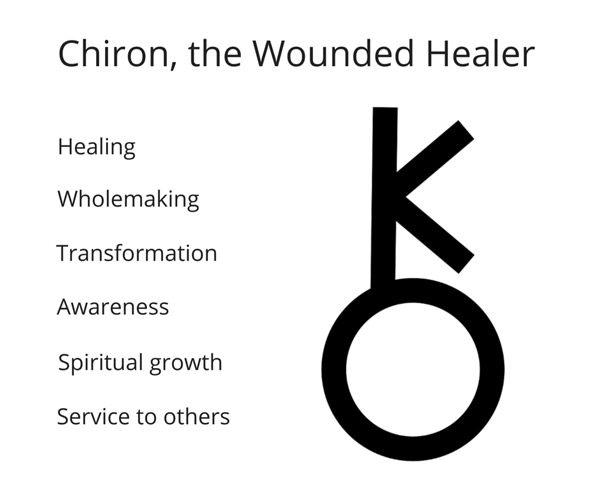 In astrology, Chiron represents your “mortal wound” -- a pain that you suffered, often in childhood, that doesn’t seem to go away. Understanding your own Chiron, the thinking goes, can become a source of learning and growth, with the potential for closure. Moonlight, in many ways, is a meditation on the wounds inflicted upon Chiron by his mother, his classmates, and the largely disinterested institutions of the state. Chiron is a gay black boy who grows up in a world that doesn’t care about gay black boys. In the film’s third act, Chiron appears anew as an adult: freshly muscled, his shy silence taking on dimensions of toughness. His three-part journey is a story of survival, but it is also a universal one of a life lived-- an attempt not only to heal, but to explore.
The beauty of Moonlight is that it is more than an LGBTQ+ film. It is a film whose pain and beauty rely on elements beyond queerness and intersectionality, and shapes a culture and history into the backdrop of its narrative; Moonlight is Chiron against the crack epidemic, the rise of hustling, the homophobia of black culture and the expectation of failure. It pulls you into a world that encapsulates, entirely, a black movie. Barry Jenkins’ Moonlight follows a simple narrative structure to tell the story of Chiron Harris coming to terms with his black, gay identity.
In astrology, Chiron represents your “mortal wound” -- a pain that you suffered, often in childhood, that doesn’t seem to go away. Understanding your own Chiron, the thinking goes, can become a source of learning and growth, with the potential for closure. Moonlight, in many ways, is a meditation on the wounds inflicted upon Chiron by his mother, his classmates, and the largely disinterested institutions of the state. Chiron is a gay black boy who grows up in a world that doesn’t care about gay black boys. In the film’s third act, Chiron appears anew as an adult: freshly muscled, his shy silence taking on dimensions of toughness. His three-part journey is a story of survival, but it is also a universal one of a life lived-- an attempt not only to heal, but to explore.
This parallels to Chiron in Moonlight are clear. This Chiron also finds himself set apart from those around him. He isn’t like the other boys, and they bully him for it. He’s quiet on the surface, with roiling emotions underneath. He’s alone at home, too, with his mother Paula (Naomie Harris) disappearing into the depths of her crack addiction. In Greek mythology, Chiron is fostered by the gods Apollo and Artemis, who school him in the arts of medicine, music, and prophecy. In Moonlight, Chiron finds a set of surrogate parents in Juan and Teresa (Mahershala Ali and Janelle Monáe), who teach him how to swim, how to make a bed, how to sit up straight, and how to live a life with dignity.
Chiron is a child who is bullied for seemingly being gay. He is helped by Juan, a local man, who is also a drug dealer, who becomes the young boy’s first real male role model. Juan imparts his wisdom to Chiron, from history; ‘There are Black people everywhere in the world, we were the first on the planet,’ to identity, ‘At some point you gotta decide for yourself who you gonna be. Can’t let no one make that decision for you'. Moonlight, although rooted in America, is a story that ties in the Afro-diasporic Black male experience, through Juan, who is of Afro-Cuban descent, by his quote, which really shows, this is could have been, and in reality is, the experience of Black males around the world; Cuba, Nigeria, Congo or Brazil etc. The film was shot in a unique way with a very shallow depth of field making it feel unnerving, vulnerable, and personal. This is because director Barry Jenkins is taking you on an extremely tender and genuine coming-of-age queer journey, portrayed through the main character Chiron.
Moonlight is ambitions, and deals deeply with complexity through it's characters, which is captured at the end of its second chapter, when something happens that chilled me both times I’ve seen it. Chiron (now portrayed by Ashton Sanders) approaches Terrel, a bully who had ordered Chiron’s friend Kevin to beat Chiron up, and smashes a chair over his head. The scene is stunning, not just as a surprise act of revenge from a character whom the audience has experienced as sensitive and sweet, but of how visually reminiscent it is of something that happened in real life.
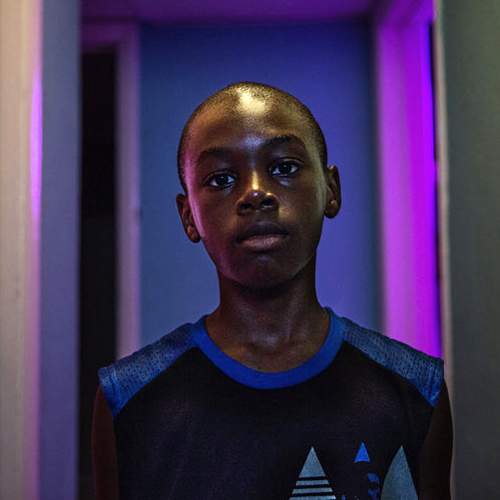

When the scene opens we see a drug deal using some familiar tropes of an archetypal dealer named Juan as he pulls into the frame in a flashy car to check in on one of his minions. The use of bright mid daylight and blown out whites makes the scene feel familiar and gritty.
Then there are two contrasting scenes paired, as the camera quickly begins to move and swirl around Jaun’s conversation until a boy who’s being chased by a pack of angry boys calling him a 'faggot' interrupts him. This allows the audience to almost be disarmed in the first three minutes of this opening shot. The cinematography is used in a way top create a more realistic atmosphere, most of the characters are of darker skin tone and so the cinematography is played safe in exposing dark skin tones, especially in harsh light, Laxton built his look around pulling rich, beautiful colour from the actors’ faces while still executing one of the boldest lighting designs of the year.
Moonlight is an Arthouse Indie Black 'Coming of Age' movie following the life of Chiron in three chapter of his life where the audience witness the change in his personality, life and his exploration of his sexuality. 'Moonlight' still holds generic traits of a 'Coming of age' movie which contain characters from a young age and going through their life till a certain point where there would of been a change in the protagonist and to others around them. This would be the basic of a 'Coming of age' and as it focuses on Black men it uses actors to reflect that.
There is a scene near the beginning of the film where Chiron is running away from Bullies as they call him 'Little' which is a negative nickname due to his small frame and shy demeanour. The use of the camera in the scene is shaky and erratic, the purpose of it is to convey Chiron's feelings and state of identity. I say this as in the scene where Chiron jumps into an empty building and locks himself inside, this converses to the audience, metaphorically, Chiron's inner feelings. As the loud banging from the bullies may signify what others tell him is wrong or what he knows is frowned upon amongst others and the loud banging from the doors is those thoughts trying to infiltrate his own mind. Chiron puts his hands to his ears to signify discomfort, which may connote his unease of others judgements and how he does not want them to come into his mind, thus why he seeks refuge in an empty house; "his mind". Chiron while in the house picks up an empty needle, which is a reference to a sought of drug such as meth. This is a representation of the loss of childhood kids who live in impoverished households, as they are revealed to negative and harming things such as drugs at such as young age. In this scene, the introduction between Juan and Chiron begins which the movie conveying the idea of Juan intercepting the negative thoughts within Chiron's mind and wanting to help the child rather than cause harm like Chiron's mother.
This would be generic of Arthouse/Indie where they would communicate emotions through camerawork or scenery other than through the actors facial expressions. As he Arthouse genre wants their audience to think and delve into the the movie unlike mainstream movies which people of middle/upper may not find satisfaction in them. Barry Jenkins' calls Moonlight 'bringing the Arthouse to the Hood' this quote can be interpreted as Jenkins seeing the class divide in representation of Arthouse and who goes to see them. Jenkins' uses the same intellectual sound placements and camerawork to communicate certain moods and for the audience to detail each one, all by doing this in the rough/poorer parts of Miami and with Black actors who aren't as represented in Indie or Arthouse cinema and Jenkins wanted to be able bridge the two.

Barry Jenkins isn't new to film making as the director has made nine more movie but many haven't suppressed the amount of popularity the way 'Moonlight' has. The movie originated from a play called 'In the Moonlight: Black boys are blue' which was then transformed to suit the big screen. Most of the films made by Jenkins are not like the Black coming of age genre of 'Moonlight' but most focus on Black experiences like 'Moonlight' are more based on delving into deep thoughtful dialogues and cinematography. Post-Moonlight Jenkins has been getting recognition for the film ,as the period of it's release, other movies focusing on Black people's experiences such as 'Hidden Figures' and 'Get Out' were released and also made by Black directors too.
- Director Barry Jenkins sits down with Tom to talk about his latest film, Moonlight. Based on a play written by Tarell Alvin McCraney, Moonlight has only been out for a week, but its film festival showings this year have resulted in an outpouring of praise.
- Barry Jenkins TALKS about his lyrical new film "Moonlight." The coming-of-age drama follows a boy named Chiron as he grapples with his identity and sexuality, and navigates life in a rough neighbourhood in Miami.

Mahershla Ali is an actor who features in 'Moonlight' but is know for his roles in the Netflix show Luck Cage and in House of Cards which he was acclaimed for playing a good role for them. He plays these roles in mind of wanting exclusion for young black teens in the industry. As he played 'Cottonmouth' in Luck Cage which focuses on issues faced by Black Americans.

Janelle Monae is a Singer known for her most known song 'Tightrope' and being in a collective of artists such as Jidenna who continuously speak on Black issues and support groups such as BLM. Monae already has a large fan following and social following which would og helped movies such as 'Moonlight' to be promoted. She also worked on another movie called 'Hidden Figures' which did dramatically well in Box Office, like Moonlight, and also revived 100% on Rotten Tomatoes and 7.5/10 on IMb. The movie focuses on the un-told story of Mary Jackson (Janelle Monae), Katherine Johnson (Taraji P. Henson) and Dorothy Vaughan (Octavia Spencer) who served in helping the biggest operation of sending John Glenn into space. It deals with topics of Black women and how they helped with a great operation but still were forgotten and written off (much like most of History)
Media Institutions
- What is the institutional source of the text?
A24 and Plan B Entertainment
- In what ways has the text been influenced or shaped by the institution which produced it?
I think specifically the genre and stories portrayed, Plab B Ent. is know to produce films such as 12 Years a Slave which hold the same story of telling Black struggle and issues. A24 which is known for it's more less mainstream Indie movies which may have influenced the production of 'Moonlight'. Indie films are know for being emotional and well thought of with scenes which have deeper meaning and can be interpreted differently with each audience member which Moonlight does itself.
- Is the source a public service or commercial institution? What difference does this make to the text?
A24 is an independent private entertainment company while Plan B Ent. is a public institution. I think A24 is private it shows how it maybe directed to those of higher class, which maybe because of appeal of arthouse and how it is directed to audience Pierre Bourdieu calls ‘cultural competences’ – a familiarity with ‘high’ cultural forms and this is usually associated with the middle classes as they are educated. So I think this may promote Moonlight as more socially ware and better than other mainstream movies.
- Who owns and controls the institution concerned and does this matter?
Jenkins found financing for the film in 2013, finding success after sharing the script with the executives of Plan B Entertainment at the year's Telluride Film Festival. Dede Gardner and Jeremy Kleiner of Plan B Entertainment became producers of the film, while A24 undertook to finance it and handle worldwide distribution, which marked the company's first production.
- How has the text been distributed?
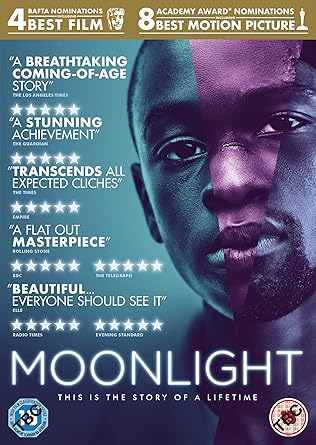
The DVD cover itself hold typical conventions of having the title of the film to be the same font as on posters or magazines which creates synergy between the products of the film and print too. Having the star rating next too all the reviews is there to show the film a being extremely successful and something for audiences to watch. To add, the addition of the yellow-golden banner stating that the movie is award winning is another convention to show how the movie is successful and a must-watch. With the bright colours of blue and purple hues is used to attract the audience too, as the colours are the same throughout promotions of the film making it consistent in what the audience know links to Moonlight.

Media Audiences
The target audience in terms of psychographics would be the mainstreamers, the explorers and the reformers. In terms of demographics it would appeal to an ABC1 audience, mainly consisting of the young adult group and older. The way it way the trailer showed what it was about and the promotions that went into promoting the film were done well to inform audiences what the film would be about. Because of those it would appeal greatly to a lot of Black people as I said mostly those of a young adult group but maybe those of an older age as many LGBTQ+ are 50+ and as they were pictures of such people in Pride pictures and such, I think there w=would be a small percentage of them viewing the movie. It may also appeal to white, middle aged men and women who at first may not like it as it is quite explicit, but it allows them to have a greater understanding of the issues faced.
Audience pleasures may be seen by the way the movie has continuity and doesn't go into various characters but of one certain characters life. It is the pleasure gained from knowing there is a slight resolution in the characters used. Also, the use of well-known celebrities Marherhalla Ali gained popularity in his role in Luke Cake playing Cottonmouth and Janelle Monae has a large fan base from her music and so when seeing her being casted in the movie would make them want to view it due to her specifically being in it creates familiarity. The social or family issues raised in the movie allows audiences to identify with the characters.
As an audience member I read the text positively. Great influence come from my age, background and gender. I am a young Black female of a Ghanaian background, My background would influence me greatly as I can identify a lot with the characters. in the play and a young Black male can do the same. Also, I know and read up a lot on topics that are connected to the black community and so seeing such things as masculinity being broken down is very insightful and rare.
Audience pleasures may be seen by the way the movie has continuity and doesn't go into various characters but of one certain characters life. It is the pleasure gained from knowing there is a slight resolution in the characters used. Also, the use of well-known celebrities Marherhalla Ali gained popularity in his role in Luke Cake playing Cottonmouth and Janelle Monae has a large fan base from her music and so when seeing her being casted in the movie would make them want to view it due to her specifically being in it creates familiarity. The social or family issues raised in the movie allows audiences to identify with the characters.
As an audience member I read the text positively. Great influence come from my age, background and gender. I am a young Black female of a Ghanaian background, My background would influence me greatly as I can identify a lot with the characters. in the play and a young Black male can do the same. Also, I know and read up a lot on topics that are connected to the black community and so seeing such things as masculinity being broken down is very insightful and rare.
------------------------------------------------------------------------
Secondary Research:


-The Guardian review: Moonlight portrays black gay life in it's joys, sadness and complexity


- Affinity magazine: Why Hyper masculinity is Toxic to Black Men


Interviews:
- Andre Holland who stars as Kevin(Audult) gets interviewed and talks about the movie and the different ways each character is able to convey masculinity in a certain way. Also the taboo of homosexuality in the black community. André says, "There’s so many shades to masculinity and the characters is in this movie show us that vulnerability is power."
- Ashton Sanders talks about black identity, the movies themes and his own vulnerabilities. Talks off how people in the black community cann relate to themes in the movie. An example would be lack of love or lack of a father figure, people know someone or themselves have gone through this.
-The stars of the movie and directors talk of the movie. Director Barry Jenkins talks of the intimacy to himself and the movie but also how problems can occur when you environment isn't helpful to yourself and thus affect you mentally too.
-The director and strs talk about Moonlight and what they themselves have gained and thought of the movie. Barry Jenkins states "It's told in three parts. Instead of a long arc, it's the three most pivotal moments in this guy's life" .
- A sequence of shots from Barry Jenkins' 'Moonlight' and movie shots from various Wong-Kar movies and the similarities held by the two directors.
For myself, I still can't get out of my mind those soft atmospheres, the touches and all those unique feelings. I am so glad that Jenkins got the inspiration from Wong Kar-wai and crafted one of the best movie of our generation.
Movies:
-Moonlight (Barry Jenkins, 2016)
-Days of Being Wild (Wong Kar-wai, 1990)
-In the Mood for Love (Wong Kar-wai, 2000)
-Happy Together (Wong Kar-wai, 1997)


